
Why Semiconductor Applications Require a Different Approach to Material Selection
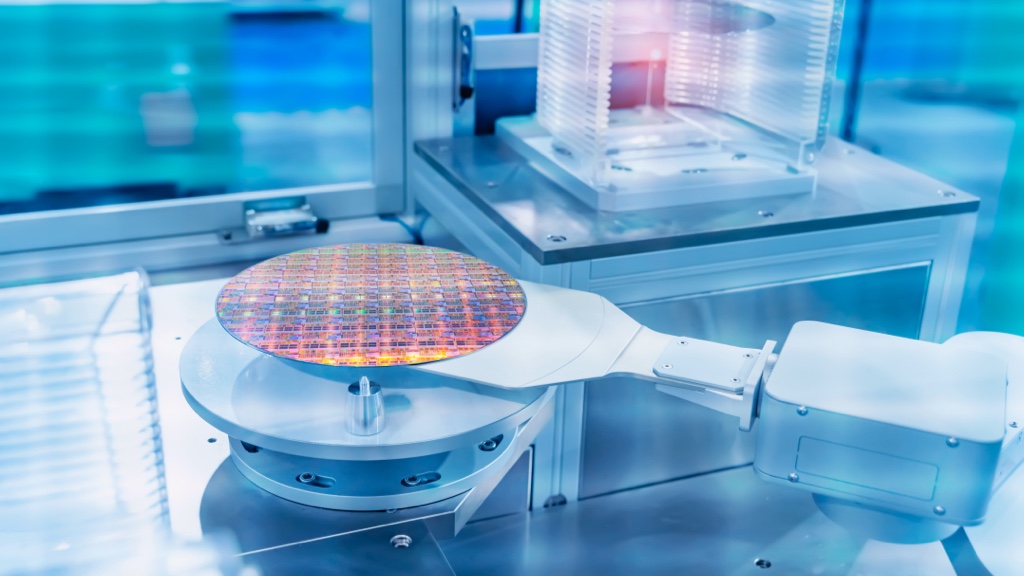
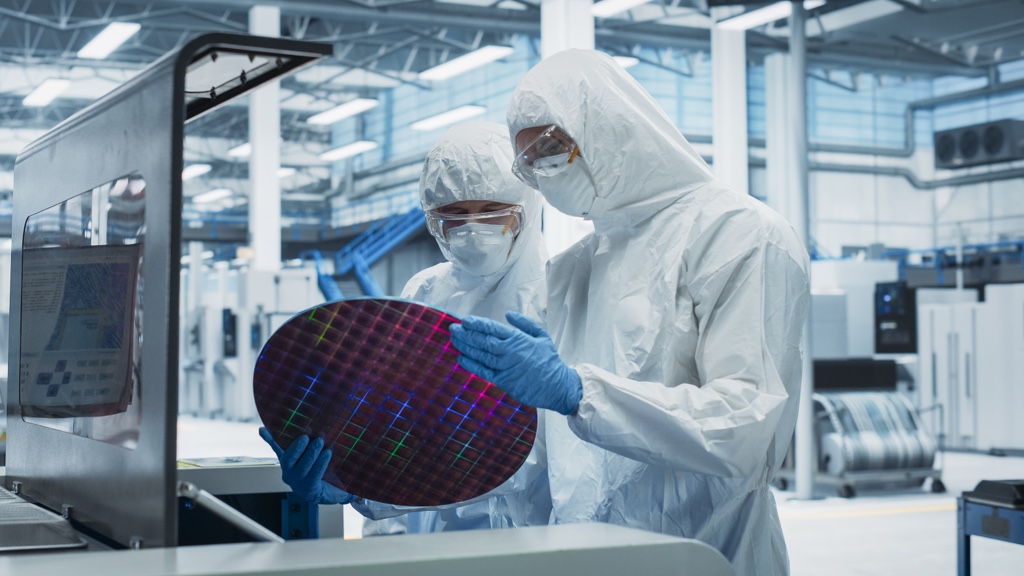
O-rings create the seal for vacuum environments, prevent toxic gas leaks, and contain corrosive chemicals. They are necessary for protecting highly sensitive wafers from particulate contamination and process defects. Material selection is also a key factor in reducing stickiness and adhesion issues for wafer transfer. Therefore, selecting the right sealing materials for semiconductor applications requires a different approach.
O-rings in semiconductor applications often:
- Are frequently cycled (compression/decompression creates wear particles)
- Are often exposed to aggressive chemistries, plasma, or UV
- Operate at elevated temperatures where outgassing rates increase significantly
- Can be overlooked during contamination root-cause analysis
Selecting the right O-ring material can improve uptime in semiconductor manufacturing. The right O-ring resists chemical attack, plasma exposure, and thermal cycling in the tool, so it holds its seal longer. As a result, it prevents unplanned failures, contamination events, and costly downtime.
The Most Common O-Ring and Sealing Materials for Semiconductor Applications
1. Perfluoroelastomer (FFKM) — The Gold Standard
Best for: Semiconductor fab, plasma etch chambers, CVD (chemical vapor deposition) equipment tools, aggressive wet chemistries, high-purity processing.
FFKM is the default recommendation for demanding clean room environments, and for good reason. The material offers:
- Near-universal chemical resistance — compatible with nearly every solvent, acid, base, and oxidizer used in semiconductor processing
- Extremely low outgassing — critical for vacuum and plasma environments where volatile compounds can contaminate wafer surfaces or optical components
- High temperature performance — most FFKM compounds are rated from 480°F to over 625°F (249°C to 330°C+)
- High purity formulations — available in ultra-low extractable grades designed to meet SEMI standards
- Clean Room Manufactured-for ultra purity-some FFKM compounds can be made in a clean room and individually packaged
Marco Sealing Solutions’ proprietary Markez® FFKM line offers the performance profile of major brands like Kalrez® and Chemraz® at a significantly lower cost. Markez compounds Z1403 and Z1206, for example, are white FFKMs designed specifically for high-purity semiconductor applications with improved plasma resistance for direct plasma exposure and low extractables — comparable to Kalrez® 8575 and Chemraz® 513. For the most demanding high-temperature work, Z1400 delivers compression set resistance up to 335°C with very low outgassing, suitable for the harshest etch and deposition environments. Z1206 offers almost universal chemical compatibility for use in semiconductor and general industrial applications.
The tradeoff: FFKM is the most expensive elastomer option. In applications where its full performance envelope isn’t required, other materials offer better value.
2. FKM (Viton®) — The Workhorse for Moderate Demands
Best for: Less aggressive wet process tools, general-purpose semiconductor equipment
FKM (commonly sold under the Viton® brand) is the most widely used high-performance elastomer in the semiconductor industry.
Key attributes for semiconductor use:
- Good chemical resistance to many acids, oils, and fuels
- Temperature resistance up to ~400°F (204°C)
- Better particle generation profile than standard nitrile or EPDM
- Significantly lower cost than FFKM
FKM is a reasonable choice for equipment operating in less aggressive chemical environments — for example, process tools that see moderate temperatures and standard solvents, but not plasma or strong oxidizers. It also appears frequently in semiconductor-adjacent applications such as facility infrastructure, where FFKM performance isn’t warranted.
V1020 is one of the most chemically resilient FKM types available. Compare to Parker V1260-75. V1000 is a low-cost, high-inventory general-purpose commodity FKM, similar to Parker V0747-75
The tradeoff: FKM is not recommended for hot amine exposure, steam, or many plasma applications. Outgassing performance, while better than commodity elastomers, doesn’t approach FFKM grades. It can also be affected by certain ketones and esters common in some cleaning protocols.
3. Fluorosilicone(FVMQ) — Ash and Etch Applications
Best for: O3 and O2 ash processes, some etch applications, environments requiring both low-temperature flexibility and moderate chemical resistance
Fluorosilicone occupies a niche between silicone and FKM — it combines the wide temperature range of silicone with meaningfully improved chemical resistance. In semiconductor manufacturing, blue fluorosilicone compounds are a recognized choice for ozone and oxygen-based ash tools.
Marco recommends the F1001 blue fluorosilicone (Shore A 70) which is rated down to -100°F (-73°C) while handling the oxidizing environments that standard silicone cannot tolerate.
The tradeoff: Fluorosilicone is not suitable for ketones, esters, or brake fluids. It shouldn’t be specified for applications that require FFKM-level chemical resistance.
4. PTFE and Encapsulated O-Rings — When Elastomers Aren’t Enough
Best for: Extremely aggressive chemistries, applications where any elastomer contamination is unacceptable, ultra-pure fluid handling, and when low friction is required
For applications where even FFKM isn’t appropriate — or where a very soft sealing force is required against a delicate surface — PTFE and FEP-encapsulated o-rings offer a chemically inert alternative. PTFE itself has virtually universal chemical resistance and near-zero extractables. PTFE has one of the lowest coefficients of friction among solid materials. It exhibits virtually zero surface tackiness, which is ideal for reducing stickiness and adhesion issues during wafer transfer.
The engineering tradeoff is mechanical: PTFE is not elastic. Encapsulated o-rings (a silicone or FKM core wrapped in an FEP or PTFE jacket) recover some of that compliance while maintaining the inert outer surface.
These are particularly common in ultra-high-purity fluid delivery systems and gas panels where any elastomer outgassing could compromise process chemistry.
How to Choose: A Decision Framework
Condition: Plasma etch or deposition (CVD, PVD, ALD)
Recommended Material: FFKM (Markez® Z1403, Z1400, Z1419, Z1206)
Condition: Hot amines, strong acids, wide chemical range
Recommended Material: FFKM (Markez® Z1352, Z1028)
Condition: High-temp furnace / LPCVD, inert environment
Recommended Material: FFKM (Markez® Z1403) Silicone VMQ
Condition: O3 / O2 ash process
Recommended Material: FFKM (Markez Z1403, Z1206) Fluorosilicone FVMQ
Condition: Moderate chemical exposure, lower cost required
Recommended Material: FKM / Viton®
Condition: Ultra-pure fluid / gas delivery, extreme purity
Recommended Material: PTFE or FEP-encapsulated
Working With a Specialist Makes a Difference
Selecting the right sealing materials for semiconductor applications isn’t a catalog exercise. It requires matching the material to the exact demands of your specific process environment. The intersection of chemical resistance, thermal stability, outgassing levels, particle generation, plasma resistance, and equipment design makes it a materials engineering problem. An engineering problem where the right answer varies considerably from one application to the next.
Marco Sealing Solutions has supported semiconductor, life sciences, and precision manufacturing customers with demanding sealing requirements since 1980. Our engineers can assist with material selection, review compound datasheets, and — when needed — develop custom formulations for applications where standard grades fall short.
Whatever material your application calls for, we stock a broad range of sealing compounds — including FFKM and other specialty elastomers — and can turn around emergency o-ring shipments fast to get a down semiconductor tool back online.
Have a specific semiconductor application? Connect with a Marco sealing expert or explore our full Markez® FFKM compound line and semiconductor sealing resources.
Marco Sealing Solutions (formerly Marco Rubber & Plastics) is an ISO 9001:2015 certified manufacturer and supplier of specialty sealing solutions, with 3,000+ material formulations and engineering support available at no cost for qualified applications.