What Is the Best O-Ring Material for Cleanroom Tools?
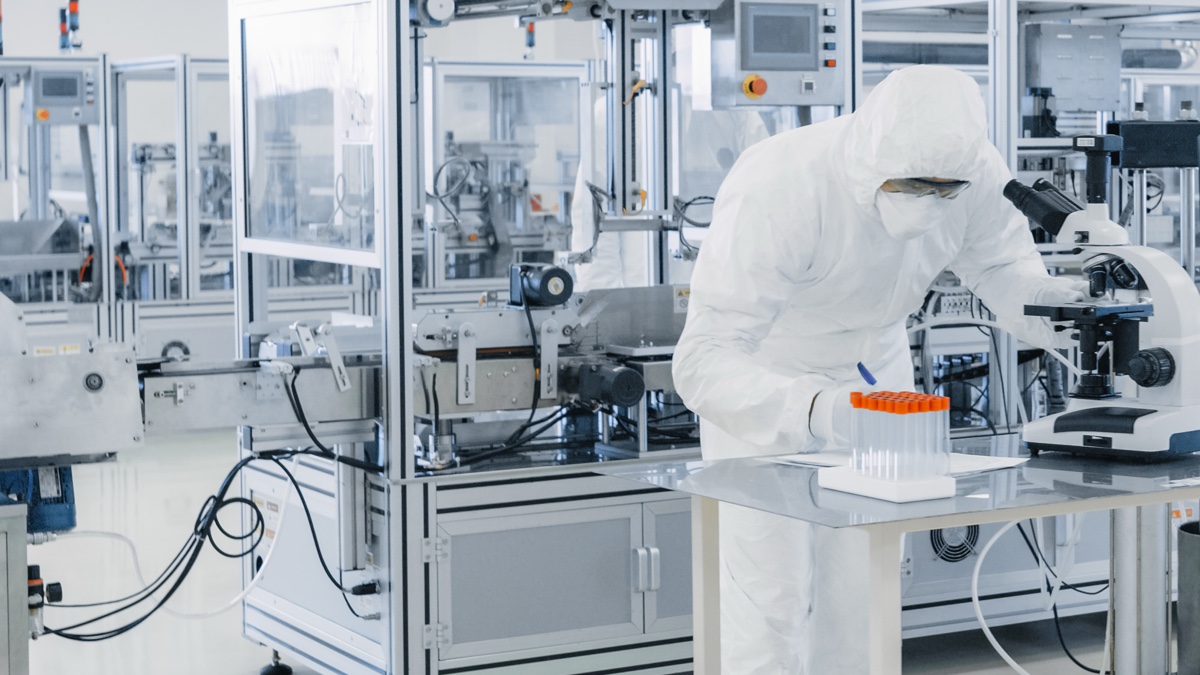
If you’re specifying seals for cleanroom equipment, material choice matters more than almost any other design decision. The wrong elastomer can become a source of contamination — outgassing volatile compounds, shedding particles, or reacting with process chemicals in ways that compromise the entire environment. The right one disappears into the background, letting your process run. However, this important decision doesn’t just include selecting the right sealing materials for your cleanroom applications. Even a well-chosen material can fail this mission if its packaging is compromised before it ever reaches the tool, introducing particulates or contaminants that undo the cleanroom controls you’ve built around it. Parts packaged in a cleanroom eliminate those concerns.
This article breaks down the leading o-ring materials for cleanroom applications, when each is the right call, and what to watch out for.
Why Cleanrooms Demand a Different Approach to Sealing Material Selection
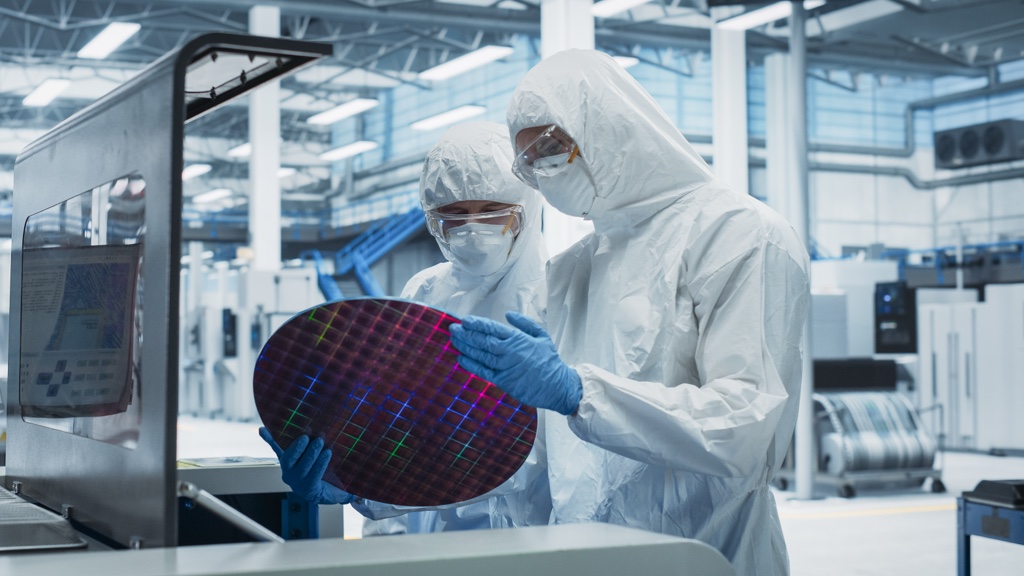
Cleanroom tools operate in some of the most unforgiving conditions in manufacturing — high vacuum, aggressive plasma chemistries, and repeated thermal cycling, all within an environment where a single particle can ruin a wafer. O-rings are what make that possible: they seal vacuum chambers, contain toxic and corrosive process gases, and keep the outside world from contaminating the process. Material selection is what determines whether they succeed. The right elastomer resists outgassing and particle generation, holds up to the chemicals it contacts, and minimizes stickiness and adhesion during wafer transfer — while the wrong one can become the contamination source it was meant to prevent.
Standard industrial o-ring and seal selection is largely about temperature and chemical compatibility. Selecting sealing materials for cleanroom applications adds a third dimension: contamination potential.
In ISO Class 1–6 environments — common in semiconductor fabrication, pharmaceutical manufacturing, medical device assembly, and aerospace precision manufacturing — every component inside the process boundary is a potential particle or outgassing source. O-rings are particularly high-risk because they:
- Are frequently cycled (compression/decompression creates wear particles)
- Are often exposed to aggressive chemistries, plasma, or UV
- Operate at elevated temperatures where outgassing rates increase significantly
- Are sometimes overlooked during contamination root-cause analysis
As a result, a seal that performs fine in a standard industrial environment can be a meaningful contamination contributor in an ultra-clean or Class 3 fab environment.
The Five Most Common O-Ring and Sealing Materials for Cleanroom Applications
1. Perfluoroelastomer (FFKM) — The Gold Standard
Best for: Semiconductor fab, plasma etch chambers, CVD (chemical vapor deposition) equipment tools, aggressive wet chemistries, high-purity pharmaceutical processing
FFKM is the default recommendation for demanding clean room environments, and for good reason. The material offers:
- Near-universal chemical resistance — compatible with nearly every solvent, acid, base, and oxidizer used in semiconductor processing
- Extremely low outgassing — critical for vacuum and plasma environments where volatile compounds can contaminate wafer surfaces or optical components
- High temperature performance — most FFKM compounds are rated from 480°F to over 625°F (249°C to 330°C+)
- High purity formulations — available in ultra-low extractable grades designed to meet SEMI standards
- Marco Sealing Solutions’ proprietary Markez® FFKM line offers the performance profile of major brands like Kalrez® and Chemraz® at a significantly lower cost. Markez compound Z1403, for example, is a white FFKM designed specifically for high-purity semiconductor applications with improved plasma resistance for direct plasma exposure and low extractables — comparable to Kalrez® 8575 and Chemraz® 513. For the most demanding high-temperature work. Z1318 has excellent resistance to a wide range of chemicals and steam. It is compliant to FDA specification 21 CFR 177.2600 for use in food and beverage contact applications and is tested and certified to USP Class VI specification for use in medical applications. Z1206 offers almost universal chemical compatibility for use in semiconductor and general industrial applications.
The tradeoff: FFKM is the most expensive elastomer option. In applications where its full performance envelope isn’t required, other materials offer better value.
2. FKM (Viton®) — The Workhorse for Moderate Clean Room Demands
Best for: Less aggressive wet process tools, general-purpose semiconductor equipment, some pharmaceutical applications
FKM (commonly sold under the Viton® brand) is the most widely used high-performance elastomer across industries, and it holds a meaningful place in clean room applications where conditions don’t require full FFKM performance.
Key attributes for clean room use:
- Good chemical resistance to many acids, oils, and fuels
- Temperature resistance up to ~400°F (204°C)
- Better particle generation profile than standard nitrile or EPDM
- Significantly lower cost than FFKM
FKM is a reasonable choice for equipment operating in less aggressive chemical environments — for example, process tools that see moderate temperatures and standard solvents, but not plasma or strong oxidizers. It also appears frequently in semiconductor-adjacent applications like facilities infrastructure, where FFKM performance isn’t warranted.
V1039 is Compliant to FDA specification 21 CFR 177.2600 for use in food and beverage contact applications and tested and certified to USP Class VI specification for use in medical applications. In addition, V1118 is also certified by 3-A Sanitary Standards.
The tradeoff: FKM is not recommended for hot amine exposure, steam, or many plasma applications. Outgassing performance, while better than commodity elastomers, doesn’t approach FFKM grades. It can also be affected by certain ketones and esters common in some cleaning protocols.
3. Silicone (VMQ) — High-Temperature Applications
Best for: excellent heat and compression resistance and great flexibility. Additionally, it is resistant to fungal and biological attacks.
Silicone o-rings are a go-to for furnace and low-pressure CVD (LPCVD) applications where temperatures are extreme, and chemical exposure is relatively benign. High-temperature silicone grades can operate up to 500°F (260°C) in continuous service, with good flexibility at both temperature extremes.
Marco stocks the following clean room-appropriate silicone compounds: S1035, S1037, S1055, S1056, S1065, and S1144.
The tradeoff: Silicone has poor resistance to many chemicals, fuels, and acids. It is not suitable for wet chemistry environments and has higher gas permeability than fluoropolymer materials. Particle generation under mechanical cycling is also worth monitoring in critical applications.
4. EPDM — Steam and Chemical Resistance
Best for: Steam and chemical resistance to solvents, acids, and other mild chemicals. EPDM is lower-cost and known for its resistance to high-temperature steam.
Marco recommends the E1074 (Shore A 70) with a temperature range of – 65° to 300°F. It is USP Class VI, 3A-Dairy, USDA, and FDA compliant and tested and certified to USP Class VI specification for use in medical applications.
The tradeoff: EPDM is not resistant to aliphatic or aromatic hydrocarbons, mineral oils, halogenated or non-polar solvents.
How to Choose Sealing Materials for Cleanroom Applications: A Decision Framework
Condition: Semiconductor plasma processes — CVD, PECVD, PVD, ashing, oxidation, EPI
Recommended Material: FFKM (Markez® Z1206) — 75A white, excellent plasma resistance, wide chemical compatibility, purpose-built for these exact processes
Condition: Plasma exposure requiring higher purity and wider temperature range.
Recommended Material: FFKM (Markez® Z1403) — 75A white, improved plasma resistance, low extractables, rated to 600°F
Condition: FDA/USP Class VI chemical processing, pharma-grade clean room seals
Recommended Material: FFKM (Markez® Z1318) — 75A white, USP Class VI and FDA compliant, wide chemical compatibility, rated to 500°F
Condition: General chemical exposure, FDA/USP Class VI compliance at lower cost than FFKM
Recommended Material: FKM (V1039 or V1118) — both 75A/70A white, FDA and USP Class VI compliant; V1039 is clean room manufactured and packaged
Condition: Steam, CIP/SIP, dairy- or pharma-grade mild chemical exposure
Recommended Material: EPDM (E1074) — 70A off-white, USP Class VI, 3A-Dairy, USDA and FDA compliant
Condition: General static clean room sealing, wide range of durometers/colors for gland fit
Recommended Material: Silicone (S1035, S1037, S1056, S1144) — USP Class VI compliant, S1037 is clean room manufactured
Condition: Biomedical implant-grade, extreme purity
Recommended Material: Silicone (S1055) — 40A clear, FDA and USP Class V/VI biomedical grade, passes full biological reactivity testing
Additional Considerations for Selecting Sealing Materials for Cleanroom Applications
Color matters. In some cleanroom protocols, o-ring color is used to visually confirm correct material installation. White, amber, and clear FFKM compounds (like Markez Z1403 and Z1407) are specified in part because they’re visually distinct from black compounds, reducing installation errors during maintenance.
Durometer affects seal force. Softer compounds (lower Shore A) require less compression force — important when sealing against delicate surfaces like quartz or sapphire windows. Markez Z1411 (Shore A 62) is a lower-durometer FFKM designed exactly for this use case.
Particle generation is influenced by groove design. Even the best material will generate particles if the groove is improperly dimensioned. Under-compression leads to leakage; over-compression accelerates wear and particle generation. Review groove design guidance alongside material selection.
Lot traceability and documentation. Cleanroom supply chains typically require full material certifications, lot traceability, and compliance documentation (SEMI standards, FDA, USP Class VI as applicable). Ensure your supplier can provide these as standard deliverables.
Working With a Specialist Makes a Difference
Selecting sealing materials for cleanroom applications isn’t a catalog exercise. The intersection of process chemistry, temperature profile, vacuum requirements, purity standards, and equipment design makes it a materials engineering problem — one where the right answer varies considerably from one application to the next.
Marco Sealing Solutions has supported semiconductor, life sciences, and precision manufacturing customers with demanding sealing requirements since 1980. Our engineers can assist with material selection, review compound datasheets, and — when needed — develop custom formulations for applications where standard grades fall short.
Have a specific cleanroom application? Connect with a Marco sealing expert. Explore our full Markez® FFKM compound line and other Clean Room compliant materials.
Marco Sealing Solutions (formerly Marco Rubber & Plastics) is an ISO 9001:2015 certified manufacturer and supplier of specialty sealing solutions, with 3,000+ material formulations and engineering support available at no cost for qualified applications.