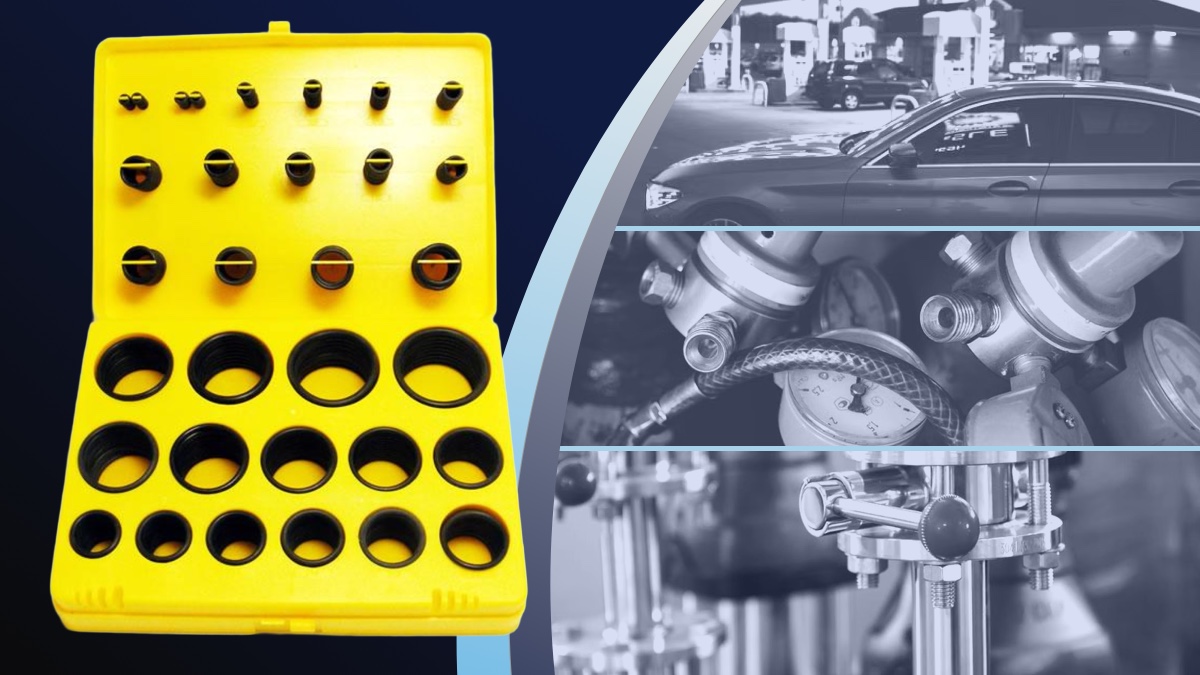
Buna O-rings are one of the most widely used seals in industry. They are also called nitrile or NBR O-rings. Engineers specify them for hydraulic systems, fuel handling, and general industrial equipment. Procurement teams like them too, because they cost little and are easy to find.
However, Buna O-rings are not the right fit for every environment. The wrong fluid, temperature, or exposure can cause swelling, cracking, or leaks. Therefore, it pays to understand the material before you specify it.
This guide walks through:
- Key properties and Marco’s Buna compounds
- Temperature range and chemical compatibility
- Advantages, limitations, and common applications
- How Buna compares to EPDM, FKM, silicone, and FFKM
- Common failure modes and how to prevent them
Quick Reference: Buna O-Rings at a Glance
| Property | Typical Value |
|---|---|
| Material | Acrylonitrile-butadiene rubber (NBR) |
| Standard temperature range | -30 °F to +250 °F (-34 °C to +121 °C) |
| Specialty grade range | -65 °F to +275 °F (-54 °C to +135 °C) |
| Common hardness | 70 and 90 Shore A |
| Best with | Petroleum oils, fuels, hydraulic fluids, water |
| Avoid | Ketones, brake fluids, strong acids, ozone, UV |
Use this table as a starting point. Then confirm the details below for your specific application.
What Are Buna O-Rings?
Buna is a synthetic rubber called acrylonitrile-butadiene rubber (NBR). You will also see it listed as Buna-N, nitrile, or NBR.
It is one of the “big four” elastomer sealing materials. The other three are EPDM, FKM (Viton®), and silicone. Buna stands out for its balance of performance and cost. As a result, it is one of the most widely stocked O-ring materials in the industry.
Key Properties of Buna O-Rings
Buna O-rings offer well-rounded mechanical properties:
- Good wear resistance: suitable for dynamic applications
- Strong compression set resistance: holds sealing force over time
- Good resilience: recovers its shape after deformation
- Low permeability: seals gases and fluids well
- High tensile strength: stands up to mechanical stress
Most standard Buna O-rings come in 70 or 90 durometer. The 70 durometer grade is the standard, more flexible choice. In contrast, 90 durometer is harder and better for high pressure.
Buna O-rings are usually black, though other colors are available. They also come in standard AS568 and metric sizes, making them easy to source and replace.
Marco’s Buna O-Ring Compounds
Marco stocks a full range of Buna-N compounds. Each one is built for a specific need:
| Compound | Durometer (Shore A) | Temperature Range | Key Feature / Specification |
|---|---|---|---|
| B1000 | 70 | -31 °F to +250 °F (-35 °C to +121 °C) | Lowest-cost general-purpose NBR |
| B1001 | 90 | -31 °F to +250 °F (-35 °C to +121 °C) | General purpose, higher pressure |
| B1002 | 70 | -31 °F to +250 °F (-35 °C to +121 °C) | FDA compliant (21 CFR 177.2600) |
| B1011 | 70 | -31 °F to +230 °F (-35 °C to +110 °C) | Internally lubricated with PTFE |
| B1058 | 70 | -31 °F to +250 °F (-35 °C to +121 °C) | NSF 61 certified (drinking water) |
| B1083 | 70 | -65 °F to +275 °F (-54 °C to +135 °C) | Improved low- and high-temperature resistance |
| B1105 | 70 | -31 °F to +250 °F (-35 °C to +121 °C) | Metal detectable; FDA compliant |
| B1122 | 70 | -31 °F to +250 °F (-35 °C to +121 °C) | NSF 51 certified (food contact) |
| M1000 | 70 | -65 °F to +275 °F (-54 °C to +135 °C) | MIL-P-25732 / AMS-P-25732, MS28775 |
| M1001 | 75 | -65 °F to +275 °F (-54 °C to +135 °C) | AMS-P-83461; improved hydraulic fluid resistance |
| M1002 | 65 | -65 °F to +250 °F (-54 °C to +121 °C) | AMS-P-5315, MS29513, MS29512 |
| M1004 | 90 | -65 °F to +275 °F (-54 °C to +135 °C) | AMS-P-5510, MS28778 |
| M1005 | 65 | -70 °F to +200 °F (-57 °C to +93 °C) | AMS7271, AS3578 |
Temperature ranges are approximations for dry air service only. Do not use them as design specifications.
Temperature Range of Buna O-Rings
Temperature is one of the most important factors in O-ring selection. Standard Buna O-rings typically work from -30 °F to +250 °F (-34 °C to +121 °C). Specialty grades reach further. For example, M1000 and B1083 are rated from -65 °F to +275 °F (-54 °C to +135 °C).
That range covers most industrial environments. Still, Buna struggles at the extremes:
- At low temperatures, Buna stiffens and loses elasticity.
- At high temperatures, it can degrade and lose sealing performance over time.
For colder service, consider silicone or a low-temperature Buna grade. For hotter service, FKM O-rings are often the better choice.
Chemical Compatibility of Buna O-Rings
Buna is popular mainly because it resists petroleum-based fluids. For this reason, it is a top choice in automotive, oil and gas, and hydraulic systems.
Where Buna O-Rings Perform Well
Buna works well in contact with:
- Petroleum oils, fuels, and greases
- Mineral and vegetable oils
- Hydraulic fluids, including HFA, HFB, and HFC water-based fluids
- Water
- Silicone oils and greases
- Ethylene glycol fluids
- Air and inert gases
Where Buna O-Rings Fall Short
Despite its versatility, Buna is not compatible with everything. Buna O-rings are not recommended for:
- Ketones, such as acetone and MEK
- Halogenated and chlorinated hydrocarbons
- Strong acids
- Automotive and aircraft brake fluids
- Highly aromatic fuels and hydrocarbons
- Polar solvents
In addition, Buna resists environmental exposure poorly. Ozone, direct sunlight, and weathering all break it down over time. For outdoor or ozone-heavy environments, EPDM or FKM are usually better alternatives.
Before you specify a material, check Marco’s O-ring chemical compatibility guide.
Advantages of Buna O-Rings
There are good reasons Buna remains one of the most common sealing materials.
1. Cost-Effectiveness
Buna O-rings are among the least expensive elastomer options. As a result, they suit high-volume and cost-sensitive projects.
2. Wide Availability
Buna comes in standard sizes and durometers. This shortens lead times and simplifies maintenance.
3. Versatility
Buna is compatible with many oils, fuels, and industrial fluids. Therefore, it fits a wide range of applications.
4. Good Mechanical Performance
Buna combines durability, flexibility, and sealing strength. It also performs well in both static and dynamic service.
Limitations of Buna O-Rings
Buna is a reliable general-purpose material. However, it has clear limits you should weigh:
- Limited temperature range: It does not suit extreme heat or deep cryogenic conditions.
- Poor ozone and UV resistance: It degrades in outdoor environments over time.
- Chemical restrictions: It is incompatible with several aggressive chemicals and fluids.
- Aging and hardening: In harsh environments, it can harden and lose elasticity, which reduces sealing performance.
Common Applications for Buna O-Rings
Thanks to its balance of performance and cost, Buna is used across many industries.
Hydraulic Systems
Buna O-rings are a natural fit for hydraulic oils and fluids. You’ll find them in cylinders, valves, and pumps.
Aerospace and MIL-SPEC Applications
Military and aerospace hydraulic systems usually call out a specific material spec. For example, M1000 is made to MIL-P-25732, and M1001 is made to AMS-P-83461. See Marco’s O-ring Mil-Spec chart for the full list.
Fuel Handling Systems
Because Buna resists petroleum fuels, it is a staple in automotive fuel systems. For aerospace fuel service, M1002 is made to AMS-P-5315.
Food, Beverage, and Drinking Water
FDA-compliant and NSF-certified Buna grades are available. Learn more about Marco’s food-grade O-rings.
Pneumatic and General Industrial Equipment
Buna also works well in air systems, including compressors and actuators. In fact, it is used wherever a dependable, economical seal is needed.
How to Choose the Right Buna O-Ring
Choosing a Buna O-ring involves more than the material itself. Consider these factors:
- Durometer: 70 vs. 90, based on pressure and motion
- Temperature range: match the grade to your operating conditions
- Media exposure: confirm chemical compatibility
- Application type: static vs. dynamic sealing
- Size standard: AS568 vs. metric
- Certifications: MIL-SPEC, FDA, NSF, or UL requirements
Buna O-Rings vs. Other O-Ring Materials
Comparing Buna with other elastomers can guide your material selection:
| Material | Typical Temperature Range | Strengths | Weaknesses |
|---|---|---|---|
| Buna (NBR) | -30 °F to +250 °F (-34 °C to +121 °C); specialty grades -65 °F to +275 °F | Cost-effective; excellent petroleum oil and fuel resistance | Poor UV, ozone, and weather resistance |
| EPDM | -65 °F to +300 °F (-54 °C to +149 °C) | Excellent weather, ozone, water, and steam resistance | Poor with petroleum oils and fuels |
| FKM (Viton®) | -15 °F to +437 °F (-26 °C to +225 °C) | High temperature and broad chemical resistance | Higher cost; limited low-temperature flexibility |
| Silicone (VMQ) | -65 °F to +400 °F (-54 °C to +204 °C) | Excellent low-temperature flexibility and heat resistance | Lower tear strength and abrasion resistance |
| FFKM | +5 °F to +550 °F (-15 °C to +288 °C); specialty grades to +650 °F | Near-universal chemical resistance; highest temperature capability | Highest cost |
Each material has its place. For oil-based systems at moderate temperatures, however, Buna is often the most practical choice. For a deeper comparison, see Marco’s O-ring material selection guide.
Buna O-Ring Failure Modes and Troubleshooting
Even with the right material, Buna O-rings can fail when design factors are overlooked. Knowing the common failure modes helps extend seal life.
1. Compression Set
Compression set is one of the most common issues. The material deforms permanently and can no longer rebound. It usually comes from three causes:
High temperatures: Prolonged heat speeds up permanent deformation.
Excessive squeeze: Over-compression in the gland stresses the material.
Long-term static service: Constant load over time sets the seal.
Solution: Select the correct durometer. In addition, follow proper groove design to avoid over-compression.
2. Swelling and Chemical Degradation
Incompatible chemicals can cause Buna to swell, soften, or break down. Common culprits include strong acids, solvents, ketones, and brake fluids.
Solution: Always verify chemical compatibility first. If you can’t avoid exposure, consider an alternative such as FKM.
3. Abrasion, Wear, and Extrusion
In dynamic applications, Buna O-rings can suffer surface wear or extrusion damage. Causes include high friction, poor lubrication, rough sealing surfaces, and high pressure without back-up rings.
Solution: Use proper lubrication. For high-pressure systems, also consider a 90 durometer grade and back-up rings.
4. Ozone and UV Cracking
Buna is especially vulnerable to outdoor exposure and ozone-rich environments, such as areas near electrical equipment. Over time, this leads to cracking and seal failure.
Solution: Switch to EPDM or FKM O-rings for outdoor or ozone-exposed service.
5. Installation Damage
Sharp groove edges, improper tools, or overstretching can nick or cut an O-ring. As a result, the seal is compromised before it enters service.
Solution: Follow installation best practices and use the proper tools and lubrication.
Sourcing Buna O-Rings Through Marco
Marco Sealing Solutions stocks Buna O-rings in AS568 and metric sizes across general-purpose, MIL-SPEC, FDA, and NSF grades. Marco is also an approved Freudenberg-NOK distributor. Read more about what Freudenberg-NOK Approved Distributor Status Means for You.
With Marco, you get:
- Stocked Buna O-rings in standard sizes, such as B1000-011 and M1000-206
- MIL-SPEC, FDA, NSF, and UL-listed nitrile compounds in one place
- Access to 3,600+ materials when Buna isn’t the right fit
- Application engineering and failure analysis support

Frequently Asked Questions About Buna O-Rings
What are the temperature limits of common o-ring materials: NBR, FKM, EPDM, Silicone, FFKM?
Standard NBR (Buna) runs about -30 °F to +250 °F, with specialty grades reaching -65 °F to +275 °F. EPDM runs about -65 °F to +300 °F, and FKM about -15 °F to +437 °F. Silicone covers about -65 °F to +400 °F. Finally, FFKM reaches +550 °F, with specialty grades to +650 °F. These ranges are approximate and apply to dry air service only.
What sealing solutions meet MIL-SPEC requirements for aerospace hydraulic systems?
For Buna, Marco offers M1000 (MIL-P-25732), M1001 (AMS-P-83461), and M1004 (AMS-P-5510). For higher temperatures, FKM compounds such as V1002 are also available. See the Mil-Spec chart for details.
Which rubber compounds are rated for jet fuel and aviation hydraulic fluid exposure?
For petroleum-based aviation hydraulic fluid, consider nitrile compounds M1000 and M1001. For jet fuel, fluorosilicones such as F1001 are a common choice. However, Buna is not recommended for aircraft brake fluids.
Which O-ring materials are approved for direct food-contact applications?
Several Buna grades qualify. B1002 and B1105 comply with FDA 21 CFR 177.2600. In addition, B1122 is NSF 51 certified for food contact. B1105 is also metal-detectable.
What sealing materials can withstand H2S and sour gas environments?
Standard Buna is generally not the best choice for sour gas. Alternatives include Aflas® (FEPM) and base-resistant FKM. For the harshest conditions, FFKM compounds such as Markez® are often used. See our guide Elastomer Seal Materials for Oil & Gas: Subsea, Sour Gas, and Refinery Service for recommended compounds.
Can Buna O-rings be used outdoors?
Usually not for long-term service. Ozone and UV exposure cause Buna to crack over time. Instead, choose EPDM or FKM for outdoor applications.
Need Help Choosing the Right Buna O-Ring?
Buna O-rings remain a reliable, economical choice for oil, fuel, and hydraulic service. Still, they are not a one-size-fits-all solution. Fortunately, you don’t have to sort through the options alone.
Request a quote or contact Marco’s engineering team to find the right Buna O-rings for your application.

The information contained herein is to the best of our knowledge accurate and reliable. However, Marco Sealing Solutions makes no warranty, expressed or implied, that parts manufactured from these materials will perform satisfactorily in the customer’s application. It’s the customer’s responsibility to evaluate parts prior to use.”
Related Reading
Buna-N O-Rings Selection Guide
O-Ring Chemical Compatibility Guide
MIL Spec Compounds
Groove Design Guide Directory